
Every few months someone tells me faceless YouTube is dead. Then I find another history channel or space explainer, no face in sight, doing just fine.
Here's the thing. Faceless channels aren't dying. Lazy faceless channels are. YouTube has spent two years spelling out that it won't pay for mass-produced, templated videos. Channels that research and add their own angle keep growing.
So in this guide I'll walk you through 12 faceless YouTube channel niches that still work going into 2027. For each: why it works, who watches, competition, money and video ideas. Then how to pick yours and what's getting riskier.
If you haven't set up a channel yet, start with our step-by-step guide to starting a faceless YouTube channel. Then come back here.
The 12 Niches at a Glance
Competition and difficulty are my own judgement, not measured data.
Niche | Competition | Main monetization | Production difficulty
History stories | High | Ads, sponsorships, books and courses | Medium
Science and space | High | Ads, sponsorships, affiliates | Medium
Geography and "how the world works" | Medium | Ads, sponsorships | Medium
Personal finance basics | Very high | Affiliates, sponsorships, own products | Medium
Tech and AI explainers | High | Affiliates, sponsorships | Low to medium
Business and brand stories | Medium | Ads, sponsorships, newsletter | Medium
Kids' stories and bedtime tales | High | Ads (non-personalized), books, merch | Medium
Mythology and folklore | Medium | Ads, memberships, books | Medium
Mysteries and strange history | High | Ads, sponsorships, memberships | Medium to high
Original horror fiction | Medium | Ads, memberships, ebooks | Medium
Sleep and calm narration | Medium | Ads, memberships, audio products | Low
Philosophy and life lessons | High | Ads, affiliates (books), courses | Low to medium
Knowledge and Explainer Niches
1. History Stories and "What Really Happened"
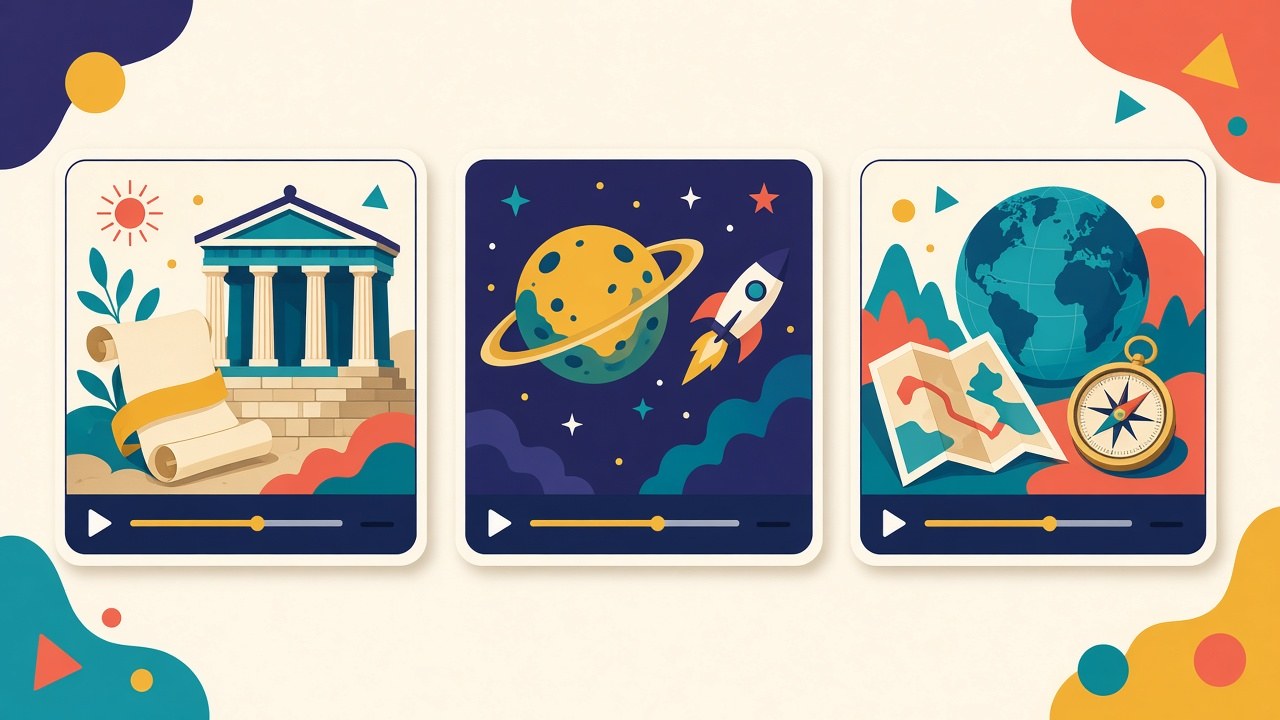
History is the classic faceless niche because the story is the star. Viewers want to know how an empire fell, not what the narrator looks like.
- Who watches: curious adults and history buffs who binge long videos.
- Competition: high on famous topics. Lower on regional history, lesser-known people and specific eras.
- Money: ad revenue, sponsorships, and later your own ebooks or courses.
- Video ideas: "The Forgotten Kingdom That Ruled the Spice Trade." "What a Day Was Like for a Roman Soldier."
- How Vidatia helps: pick a topic and a style like Oil Paint, Renaissance or Movie Noir. Vidatia drafts the script and scenes. You check the facts and add your angle.
2. Science and Space Explainers
People never run out of questions about black holes or the deep ocean. Good explainers get watched for years.
- Who watches: teens, students and adults who like learning without homework.
- Competition: high on big topics. Specific questions ("Why is Mars red?") are easier.
- Money: ads, learning-app sponsorships, and affiliate links for books or telescopes.
- Video ideas: "What Would Happen If the Moon Disappeared?" "Why You Can't Tickle Yourself."
- How Vidatia helps: animated and 3D styles make abstract ideas easy to see, and you can animate still images to show motion.
3. Geography and "How the World Works"
Why do borders look the way they do? This niche mixes maps, history and economics.
- Who watches: curious adults, travelers and students.
- Competition: medium. Plenty of room in specific regions and odd questions.
- Money: ads and sponsorships, especially from education and travel brands.
- Video ideas: "Why Almost Nobody Lives in This Part of the Country." "How One River Shaped an Entire Nation."
- How Vidatia helps: illustrated styles give a consistent look, and burned-in captions help viewers follow place names.
Money, Tech and Business Niches

4. Personal Finance Basics
Budgeting, saving and investing basics always have an audience. It's also one of YouTube's most crowded niches.
- Who watches: young adults, first-time earners and anyone trying to get their money in order.
- Competition: very high. Win with a narrow angle like freelancers, students or one country.
- Money: affiliate links, sponsorships, and your own templates or guides.
- Video ideas: "The 3-Bucket Budget, Explained With One Paycheck." "Five Money Mistakes People Make in Their First Job."
- How Vidatia helps: animated explainers fit well. One warning: don't present an AI character as a human financial expert. YouTube names that specifically (see below). Teach concepts, not personal advice.
5. Tech and AI Explainers
New tools arrive weekly, and most people want them explained plainly.
- Who watches: professionals, small business owners and beginners.
- Competition: high and fast-moving. Topics get old quickly, so speed and clarity matter.
- Money: affiliate programs for software, and sponsorships from tech companies.
- Video ideas: "How AI Image Generators Actually Work, in Plain English." "Five Settings on Your Phone You Should Change Today."
- How Vidatia helps: animated explainers. For hands-on tutorials you'll still want screen recordings. YouTube's trust and safety lead has said tutorials that repeat what's already everywhere can fall under the inauthentic content rules (TechCrunch), so bring something new.
6. Business and Brand Stories
How did a small company beat a giant? Business stories work because they're really human stories about decisions.
- Who watches: entrepreneurs, students and people who like a good comeback story.
- Competition: medium. Lots of room in smaller companies, local brands and specific industries.
- Money: ads, sponsorships and a newsletter alongside the channel.
- Video ideas: "The Company That Said No to a Billion-Dollar Offer." "How a Tiny Shop Became a Household Name."
- How Vidatia helps: multi-AI scripting (GPT, Claude and Gemini) gives you drafts to compare, and a Cinematic style adds drama.
Story Niches
7. Kids' Stories and Bedtime Tales
Parents always need a story, and that audience never ages out.
- Who watches: young children, usually with a parent nearby.
- Competition: high, and the quality bar is rising.
- Money: ads, but read the rules first. Videos set as "made for kids" don't get personalized ads, and comments, the notification bell and memberships are turned off (YouTube Help). Many creators add picture books or merch.
- Video ideas: "The Little Cloud Who Was Afraid of Thunder." "Why the Moon Follows You Home."
- How Vidatia helps: children's stories are one of Vidatia's one-click formats. Try Pixar Cartoon or Watercolour, and keep characters consistent across episodes.
8. Mythology and Folklore
Gods, monsters and legends from every culture, and much of it barely covered on YouTube.
- Who watches: teens and adults who like fantasy, games and history.
- Competition: medium. Greek and Norse myths are crowded. Many other traditions are wide open.
- Money: ads, channel memberships, and books or illustrated guides.
- Video ideas: "The Trickster Gods of Five Cultures, Compared." "The Sea Monster Sailors Feared Most."
- How Vidatia helps: Anime, Comic Book or Steampunk styles make each legend distinct, and AI image editing lets you adjust a creature until it's right.
9. Mysteries and Strange History
Unsolved puzzles and vanished ships keep viewers watching to the end.
- Who watches: adults who love a puzzle, often listening like a podcast.
- Competition: high. Research quality is what separates channels.
- Money: ads, sponsorships and memberships.
- Video ideas: "The Lighthouse Keepers Who Vanished Overnight." "The Town That Disappeared From the Map."
- How Vidatia helps: B&W Photography and Movie Noir styles set the mood. If you depict real events in a realistic style, use YouTube's AI disclosure setting.
10. Original Horror Fiction
Scary stories never go out of style. The keyword is original: your own stories, not retold creepypasta.
- Who watches: teens and adults, often late at night.
- Competition: medium. Plenty of channels, but strong original writing stands out.
- Money: ads, memberships for early episodes, and your own ebooks.
- Video ideas: "The House That Was Always One Room Bigger." "Don't Answer the Second Knock."
- How Vidatia helps: set a serious tone and add tense music from the built-in library. YouTube's disclosure page says unrealistic content, like fantasy, doesn't need an AI label (YouTube Help).
Calm and Reflective Niches
11. Sleep and Calm Narration
People play long, slow videos to fall asleep or study, often on repeat.
- Who watches: adults with busy minds and students.
- Competition: medium. The voice and mood matter more than the topic.
- Money: ads, memberships and sleep audio sold elsewhere.
- Video ideas: "A Slow Walk Through an Ancient Library." "Boring History to Fall Asleep To: Medieval Farming."
- How Vidatia helps: expressive AI voices let you tell the narrator to speak softly and slowly. Through the ElevenLabs integration you can even clone your own voice.
12. Philosophy and Life Lessons
Stoicism and practical wisdom. It overlaps with motivation but ages better.
- Who watches: young adults looking for direction, and longtime readers.
- Competition: high, and full of generic quote compilations. That's your opening.
- Money: ads, affiliate links for books and your own courses.
- Video ideas: "What Marcus Aurelius Wrote About Bad Bosses." "Three Ideas From Philosophy That Make Mornings Easier."
- How Vidatia helps: set the script's length and tone, then edit in your own take. That take is what YouTube wants to see.
How to Pick Your Niche
Don't pick the biggest niche. Pick the one you can keep going in.
- The 50-video test. Can you list 50 video ideas without forcing it? If not, keep looking.
- Check demand. Type your topic into YouTube search and note the autocomplete suggestions. Those are real searches.
- Find a sub-niche. "History" is crowded. "Maritime history of the Indian Ocean" is not.
- Know your money path. Some niches lean on ads, others on affiliates or products.
- Ask what you add. Research, humor, a regional angle, your own fiction. If the answer is "nothing," read the next section twice.
What's Getting Riskier in 2026-27
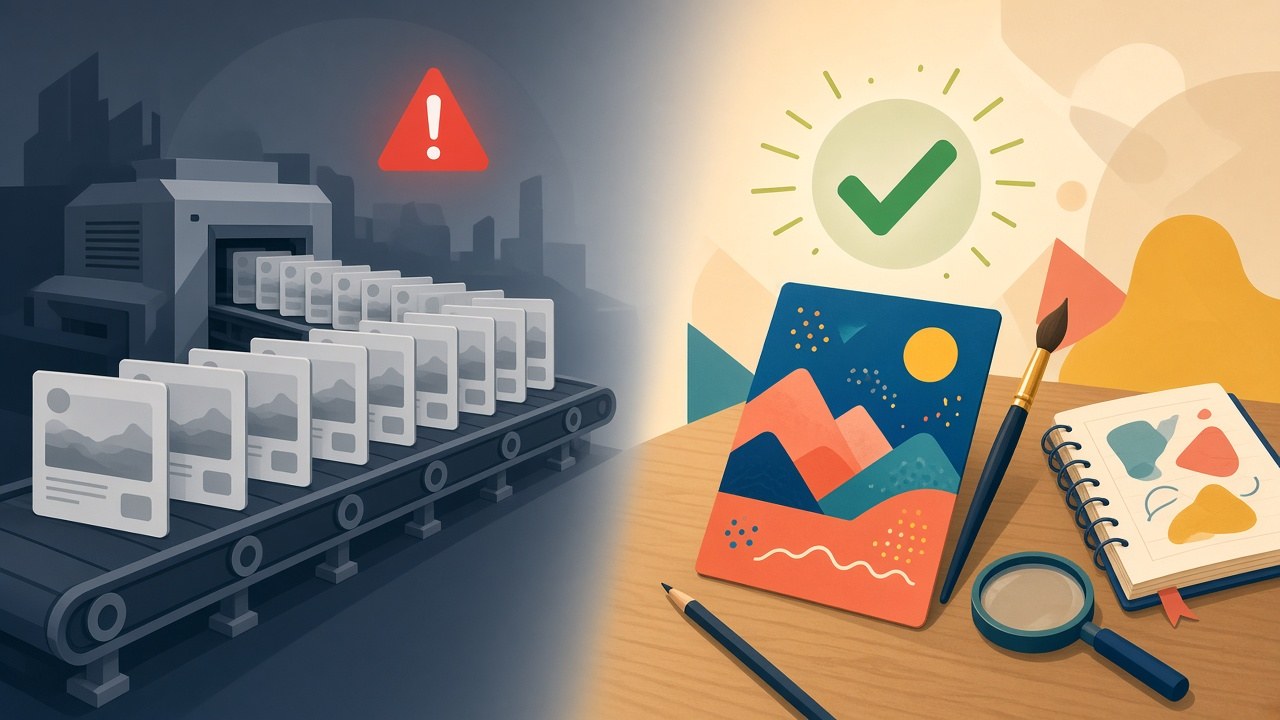
On July 15, 2025, YouTube renamed its "repetitious content" policy to "inauthentic content" and clarified that it covers content that is repetitive or mass-produced (YouTube Help). YouTube stressed it wasn't a new rule. This content was never eligible to make money. In its creator Q&A, YouTube said channels that use AI "remain eligible to monetize" and gave two examples of mass-produced content: narrated stories with only superficial differences, and slideshows with the same narration (YouTube Community).
In July 2026, YouTube went further and broke the guidance into three categories (TechCrunch, Tubefilter):
- Generic or repetitive content. Videos that look template-made or feel interchangeable. YouTube's examples include image slideshows or scrolling text with little narrative, and AI content made with generic templates "without adding the creator's original, authentic insights or perspective."
- Unsatisfying or off-putting content. Emotionally manipulative formulas, shock for views, stitched-together AI clips with no narrative arc, and fake events presented as real.
- AI personas on sensitive topics. AI characters presented as human experts giving health, legal, financial or political advice can't be monetized.
What's still fine, according to the same policy page? A series with the same characters but different storylines. The same intro and outro on different content. Using AI to edit scripts or create a unique background. Using AI to visualize a character and story you invented.
Reviewers may look at your channel's main theme, most viewed and newest videos, and metadata. So the risk is a whole channel losing monetization, not one video.
Two more rules to keep in mind. You must disclose realistic AI-generated or altered content when you upload (YouTube Help). And kids' channels are reviewed against YouTube's quality principles for kids content, which flag things like "hard to follow" mass-produced videos.
The takeaway: use AI to produce faster, then spend the saved time on research, story and your own point of view.
How Vidatia Fits Into a Faceless Channel
Vidatia is our AI video creator for faceless and animated videos, a desktop app for Windows and Mac. Choose a topic and a visual style, and it writes the script, plans the storyboard and creates the visuals and animation. You can change any part. What helps most for these niches:
- Scripts from GPT, Claude or Gemini, with length and tone you choose, and full editing.
- Dozens of visual styles, from Watercolour and Pixar Cartoon to Movie Noir and Claymation.
- Human-like AI voices you can direct for accent, speed and emotion, plus ElevenLabs voices and voice cloning.
- Burned-in captions and a built-in music library, plus Pixabay or your own tracks.
- AI image editing and animation to fix or bring any visual to life.
- Landscape, portrait and square videos, so one idea can become a long video and a Short.
- Any language for non-English channels.
At the time of writing, the sales page lists the Elite plan at $47 a month or $297 a year, with a 30-day refund guarantee. Check getvidatia.xyz for current pricing.
Want to see how it compares? Read our Vidatia vs other AI video generators breakdown, or learn how automated video production works.
Final Thoughts
Faceless YouTube still works in 2027. Faceless shortcuts don't. Pick a niche you can make 50 videos about, find a sub-niche that isn't crowded, and let AI handle production while you put your own research and perspective into every video. That's what YouTube rewards and what viewers come back for.
If you're still comparing tools, our roundup of AI video generators for marketing and faceless videos is a good next read.
FAQs About Faceless YouTube Channel Niches
What is the best faceless YouTube niche for beginners?
One you can make 50 videos about. History, science and sleep narration are forgiving because the story or mood carries the video.
Can AI-generated faceless videos be monetized on YouTube?
Yes. YouTube says channels using AI remain eligible. It won't monetize mass-produced, repetitive or templated content that adds no value of your own.
How much do faceless YouTube channels earn?
It varies widely by niche, audience and monetization method. Many channels earn little at first, so don't count on early income.
Do I need to label AI videos on YouTube?
Only when it looks realistic, like a real person saying something they didn't. Clearly animated or fantasy content doesn't need the label.
Are kids' story channels still worth it?
They can be, but videos set as "made for kids" don't get personalized ads and lose features like comments. Plan for books or merch alongside ads.
Ready to start your faceless channel? Try Vidatia and turn your first idea into a video.